EV Winter Driving Tips: Maximize Range in Cold Weather
Quick answer: To maximize EV range in winter: precondition the cabin and battery while still plugged in, heat the seats and steering wheel instead of blasting cabin heat, keep tires properly inflated (check monthly — cold drops pressure), park in a garage when you can, and plan trips with a 25–30% range buffer. Together these habits can recover most of the 10–40% range that cold weather typically costs. For the full science of why cold cuts range, see our EV cold-weather range guide.
Key takeaways
- Precondition while plugged in — warming the battery and cabin on wall power is the single biggest winter win.
- Seat and steering-wheel heaters use a fraction of the energy of cabin heating.
- Expect 10–40% less range depending on temperature; plan with a buffer, not the dashboard number.
- Winter tires + correct pressures matter more for EVs, which are heavy and torquey.
- Keep the car plugged in whenever parked in freezing weather — the battery thermal system does the rest.
Why cold weather is an EV’s toughest season
Two things happen when temperatures drop. First, the lithium-ion battery’s internal resistance rises, so it delivers energy less efficiently and accepts charge more slowly. Second — and this is the bigger factor for most drivers — heating the cabin in an EV comes straight from the battery. A gas car gets cabin heat “free” from engine waste heat; an EV has to generate every watt of warmth electrically.
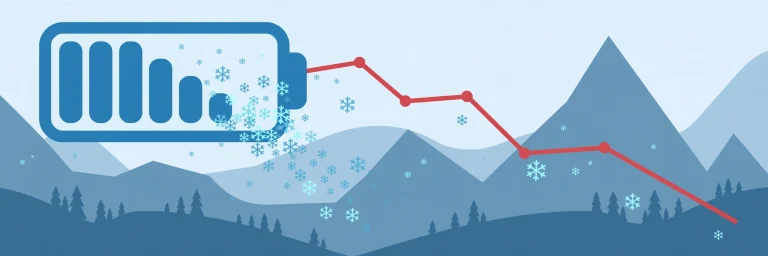
The result: studies and fleet data consistently show winter range losses of roughly 10–40%, with the exact figure depending on temperature, heater use, speed, and the car. AAA’s widely reported 2019 cold-weather testing found an average 41% range reduction at 20°F (-7°C) with the heater running, versus a 75°F baseline — the extreme end, with heating doing most of the damage. Our winter range-loss data breakdown digs into the numbers by temperature band.
The good news: unlike a gas car’s winter efficiency penalty, most of an EV’s cold-weather loss is manageable — it’s about heating strategy and preparation, not physics you can’t beat. The tips below are ordered by impact.
1. Precondition while still plugged in — the number-one tip
If you do one thing this winter, do this: warm up the car while it’s still connected to the charger. Preconditioning heats both the cabin and the battery using wall electricity instead of battery energy, so you start your trip with a warm pack and a full charge.
Most EVs let you schedule this: set a departure time in the car’s app or infotainment, and the car finishes charging and warms itself in time for your leaving. A warm battery is also more efficient from the first mile — cold batteries waste energy as heat until they reach operating temperature, so preconditioning pays back twice.
The cost is small. Warming a cabin and pack typically uses a few kilowatt-hours from the wall — at the U.S. average of about 17.3 cents per kWh, that’s well under a dollar. On an overnight EV tariff in the UK (roughly 7–9p/kWh) or in Quebec (about 7–8¢/kWh), it’s pennies. See our battery preconditioning explainer for the full details, including how preconditioning speeds up winter fast charging.
2. Heat the seats, not the air
A resistive cabin heater can draw 3–7 kW when working hard — at city speeds, that’s like giving up a quarter or more of your driving energy to warmth. Seat heaters and a heated steering wheel, by contrast, draw a few hundred watts combined because they warm you directly instead of a cubic meter of air.
The efficient winter setup: seat heater on, steering-wheel heater on, cabin temperature set a few degrees lower than you’d like (say 19–20°C / 66–68°F instead of 22°C+), fan on low. You’ll be comfortable, and the energy math is dramatically better. If your car has a heat pump, the penalty for cabin heat is smaller — our EV heat pump guide explains when it helps and when it doesn’t.
One more trick: use recirculation mode once the cabin is warm. Reheating already-warm interior air takes far less energy than continuously heating freezing outside air — just crack a window or switch back to fresh air if the windows start fogging.
3. Tires: winter rubber and monthly pressure checks
EVs are heavy and deliver instant torque, so tires already work harder than on gas cars. Winter compounds that: cold air contracts, and tire pressure drops roughly 1 PSI for every 10°F (5.5°C) of temperature fall. Underinflated tires increase rolling resistance and cost you range on top of grip.
Check pressures at least monthly in winter — and check them cold, before driving. If you live somewhere with real winter (the northern U.S., Canada, Scandinavia), dedicated winter tires are worth it: the softer compound stays grippy below about 7°C (45°F), where all-seasons harden. The small efficiency penalty of winter rubber is nothing compared to the safety gain, and proper inflation keeps it minimal.
Also: clear snow off the car fully, including the roof. Extra weight and aerodynamic drag from a snow cap both cost range, and it’s a hazard to other drivers.
4. Keep it plugged in whenever you can
In freezing weather, a plugged-in EV is a happy EV. When connected, the car can run its battery thermal management — keeping the pack from getting dangerously cold — using wall power instead of draining the battery. Many manufacturers recommend leaving the car plugged in whenever parked in extreme cold, even if it’s not actively charging.
This also means timing matters: if you can, schedule charging to finish shortly before departure rather than hours earlier. A battery that’s just finished charging is already warm, which stacks with preconditioning for the best possible cold-start efficiency.
For the cost side of all this wall-power use, our home EV charging cost guide breaks down what overnight warming actually adds to your bill — spoiler: it’s small.
5. Plan with a winter buffer, not the dashboard number
Your EV’s displayed range estimate (the “guess-o-meter”) is based on recent driving. A mild autumn week followed by a -10°C cold snap means the estimate will be optimistic until the car relearns. In winter, plan trips assuming 70–75% of the rated range, and keep a charging stop in reserve on unfamiliar routes.
On road trips, this matters more: cold batteries also charge slower, so winter legs should be shorter with more frequent stops. Our EV road trip guide covers stop planning in depth — in winter, apply its 60–70% rule even more conservatively and favor chargers you know are reliable, since a closed station hurts more when every mile counts.
| Winter habit | Typical range benefit | Effort |
|---|---|---|
| Precondition while plugged in | High — saves several kWh of battery | Set a departure time once |
| Seat/steering-wheel heat over cabin heat | High — heating is the biggest drain | Change a habit |
| Correct tire pressures | Medium — a few percent | Monthly 5-minute check |
| Keep plugged in when parked | Medium — protects battery temp | Plug in as routine |
| Lower cabin temp + recirculation | Medium | Change a habit |
| Garage parking | Medium — avoids deep-cold soak | Where available |
| Clear snow fully | Small but free | 5 minutes with a brush |
Benefits are directional estimates — your car, climate, and driving pattern set the exact numbers.
6. Use regenerative braking wisely in the cold
Here’s a subtle one: a cold battery can’t accept as much regen energy, so many EVs limit regenerative braking when the pack is cold — you’ll feel less deceleration when lifting off, and the car leans more on friction brakes. This is normal and temporary; regen returns as the battery warms.
Two implications for winter driving. First, expect the car’s deceleration behavior to feel different on a freezing morning — give yourself a little more following distance until the pack warms. Second, this is another reason preconditioning matters: a warm battery regens fully from the first mile, recovering energy you’d otherwise lose to the brake pads. Our regenerative braking explainer covers how the system works year-round.
7. Drive smoothly — winter rewards a light foot
Aggressive acceleration is always the enemy of efficiency, but winter magnifies it. Hard launches on cold tires waste energy as wheelspin, and every hard acceleration is energy the heater then competes for. Smooth, gradual inputs keep more energy in the battery — and on slippery surfaces, they’re safer too.
Three specific techniques pay off in winter. First, anticipate stops early: lifting off early lets regen (once the battery is warm) do the slowing instead of the friction brakes, recovering energy you’d otherwise throw away as heat. Second, keep highway speed moderate: aerodynamic drag rises with the square of speed, and cold dense air makes it worse — dropping from 75 to 65 mph can save 10–15% on its own, winter or not. Third, use eco or chill modes if your car offers them; they soften throttle response and often dial back climate output, which is exactly what you want when every kWh counts.
None of this requires driving like a hypermiling enthusiast. Just imagine there’s an egg between your foot and each pedal — firm enough to move, gentle enough not to break it.
8. Pack an EV-specific winter emergency kit
Winter breakdowns are rarer in EVs (fewer moving parts to fail), but getting stranded in the cold with a depleted battery is the scenario to prepare for. A winter kit for an EV driver looks slightly different from a gas car’s:
- Blankets and warm clothing: if you’re ever stuck waiting for a tow, heating the cabin on a low battery is a luxury you may not have. Dress for the possibility.
- A portable phone charger: your phone is your lifeline to roadside assistance and charger apps — keep it charged independently of the car.
- Snacks and water: standard advice, worth repeating.
- A tire inflator and pressure gauge: slow leaks show up as pressure drops in the cold; catching them early saves both range and tires.
- Washer fluid rated for deep cold: summer fluid freezes on contact in real winter. Keep the reservoir filled with winter-rated fluid.
- Charging apps, downloaded offline maps: know where the chargers are before you need one, especially on rural routes where a closed station has no backup nearby.
The deeper preparation is mental: in winter, never let the battery get critically low “because there’s a charger soon.” Chargers can be iced in, occupied, or out of service — arrive with buffer, always.
What not to do in winter
- Don’t “warm up” the car like a gas engine. EVs don’t need idling — driving gently warms the battery far faster than sitting still, and idling on battery just wastes energy.
- Don’t regularly charge to 100% or run to 0%. Cold already stresses the battery; the everyday 20–80% window (or your manufacturer’s recommendation) matters more in winter, not less.
- Don’t ignore the 12V battery. EVs still have a conventional 12V battery, and cold is what kills aging ones. If yours is 3+ years old, get it tested before deep winter.
- Don’t trust the summer range number. Plan winter trips on winter numbers — the buffer is the whole game.
- Don’t skip the manual. Preconditioning menus, winter modes, and battery-heater settings vary by car; five minutes with the manual beats guessing.
EV winter driving in the UK, Canada and Europe
Winter means very different things across the Atlantic, and your strategy should match your climate:
| Region | Typical winter | What matters most |
|---|---|---|
| UK | Mild — rarely below -5°C in most of England | Range loss is modest (often 10–20%). Damp cold and short days matter more than deep freezes; overnight EV tariffs (~7–9p/kWh) make preconditioning nearly free. WLTP ratings already assume mild conditions. |
| Canada | Severe in the Prairies (-20 to -30°C); milder on the coasts | Garage parking and staying plugged in are close to essential in the coldest provinces. Cheap electricity (Quebec ~7–8¢/kWh) keeps preconditioning costs trivial; NRCan ratings track EPA, so apply the same winter discounts. |
| Europe | Varies — Nordic deep cold vs mild Mediterranean | Norway’s experience is instructive: with roughly 9 in 10 new cars electric, Norwegians have proven EVs work fine in real winter with preconditioning and winter tires. EU electricity averages ~€0.29/kWh, so wall-power warming costs more in Germany (~€0.36–0.39) than in the Nordics (~€0.16–0.18). |
| US northern states | Minnesota, the Dakotas, New England: -15 to -25°C snaps | Same playbook as Canada: precondition, stay plugged in, winter tires. Rates vary hugely by state (EIA 2025 avg ~17.3¢/kWh), so check your utility’s overnight rates. |
The universal truth: the colder your winter, the more preconditioning and staying plugged in matter. UK drivers can get away with lighter measures; Canadian and Nordic drivers should treat them as routine.
Charging in winter: what changes
Two winter charging realities to plan around. First, DC fast charging is slower when the battery is cold — a cold pack can’t accept high charge rates, so the car limits power until the battery warms (this is “cold-gating”). Navigating to the charger in many EVs triggers battery preconditioning en route, which largely solves this — another reason to use the built-in nav for charging stops. Our DC fast charging vs home charging comparison has the full picture.
Second, Level 1 (120V) charging can barely keep up in deep cold: the battery heater may consume most of the trickle, leaving little for actual charging. If you rely on a standard outlet, winter is the time to consider a Level 2 setup — see our Level 1 vs Level 2 guide.
Sources
- AAA — Electric Vehicle Range Testing (2019 cold-weather test results, widely reported: ~41% range reduction at 20°F with HVAC on)
- Recurrent — Winter EV Range Loss (model-by-model winter range data, via automotive outlets)
- Geotab — EV Battery Health Analysis (fleet telematics on battery behavior including temperature effects)
- Natural Resources Canada — Fuel Consumption Guide (Canadian EnerGuide ratings context)
Frequently asked questions
How can I maximize my EV range in winter?
Precondition while plugged in, use seat and steering-wheel heaters instead of full cabin heat, keep tires at correct pressure, park in a garage, stay plugged in when parked, and plan trips with a 25–30% range buffer. Preconditioning alone is the biggest single win.
Should I warm up my EV before driving in winter?
Yes — but do it while plugged in, using the car’s scheduled departure or preconditioning feature. Don’t idle on battery like a gas-car warmup; driving gently warms the pack faster and wastes less energy.
Do heated seats use less battery than the heater?
Dramatically less. Seat and steering-wheel heaters draw a few hundred watts combined, while a resistive cabin heater can pull 3–7 kW working hard. Heating yourself directly is one of the most effective winter range savers.
Can I leave my EV plugged in all winter?
Yes — manufacturers generally recommend it in freezing weather. When plugged in, the car can run battery thermal management on wall power instead of draining the pack, and scheduled charging plus preconditioning means you always leave with a warm, full battery.
Do winter tires reduce EV range?
Slightly — winter compounds have higher rolling resistance than summer tires. But the safety gain far outweighs a small efficiency cost, and keeping pressures correct (cold drops PSI) minimizes the penalty.
Why is my EV’s range estimate wrong in winter?
The dashboard estimate is based on recent driving history, so it lags behind sudden temperature drops. In winter, ignore the optimistic number and plan on 70–75% of rated range until the car adapts — or just keep a permanent winter buffer.
The bottom line: Winter doesn’t have to gut your EV’s range. Precondition on wall power, heat yourself instead of the cabin, keep the tires right, and plan with a buffer — do those four things and cold weather becomes a minor inconvenience instead of a range crisis.

Content Writer | Automotive News & Electric Vehicles
Rihanna Khan writes for The Roadster, covering electric vehicles, EV charging, battery technology, car ownership, and the latest automotive developments. Her articles aim to make technical topics and buying decisions easier to understand.
Focus Areas: Electric Vehicles · Automotive News · EV Charging · Car Ownership